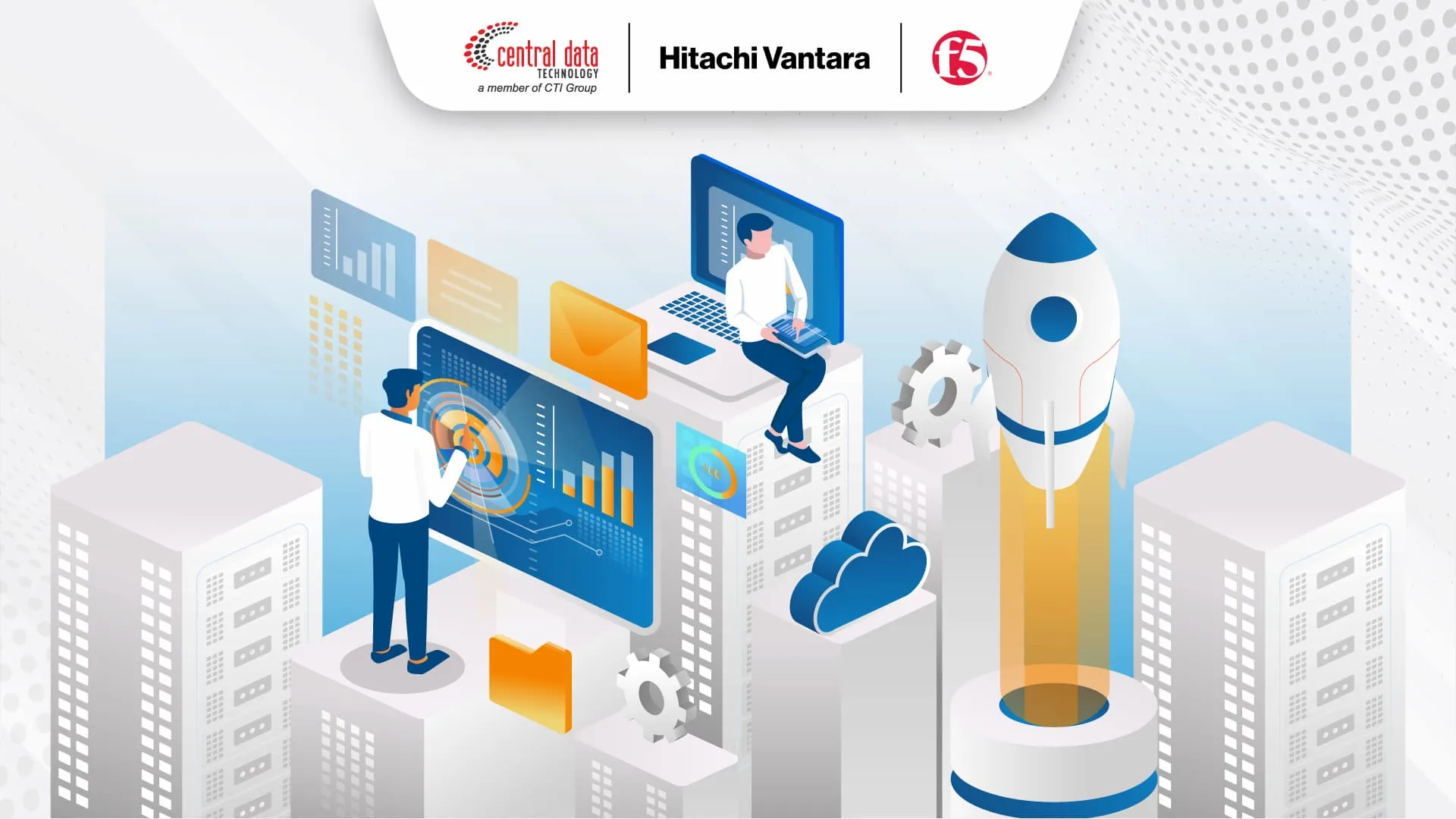
 Enterprise data has become the backbone of strategic decision-making and AI innovation. However, having more data does not automatically translate into greater value. When data is scattered across different systems and platforms, critical insights often become fragmented and difficult to access across the organization.
This is where modern data architecture comes into play. By adopting an architecture designed for hybrid and multi-cloud environments, enterprises can begin to unify disconnected data flows and manage information more consistently across the enterprise.
When Traditional Data Infrastructure Slows Down Enterprise Innovation
Many enterprises still rely on data architectures originally built for past operational workloads. Over time, these systems evolve in isolation across different platforms, making them difficult to integrate and not well suited for modern analytics demands. As a result, initiatives such as real-time analytics, cross-platform integration, and AI development often require lengthy and complex integration efforts.
When the underlying architecture lacks flexibility, information flows become fragmented. Data that should drive innovation instead becomes trapped within outdated infrastructure that can no longer keep pace with modern enterprise requirements.
Data Modernization ROI: When Infrastructure Becomes Business Value
As organizations modernize their data architecture and manage application and data connectivity more consistently across hybrid cloud environments, the role of data infrastructure begins to shift. Data is no longer viewed simply as an expensive operational burden. Instead, it becomes a strategic asset that can be leveraged across the enterprise ecosystem.
Achieving this transformation requires two critical foundations. First, the ability to consolidate scattered data into a consistent and reliable reference. Second, the ability to securely connect applications, services, and APIs across multiple cloud environments. Together, these capabilities form the backbone of modern data architecture and enable data to become a true driver of business value.
To help build this foundation, Hitachi Vantara and F5 provide complementary technology approaches that strengthen both enterprise data management and application connectivity across modern IT environments.
Hitachi Vantara Unified Data Management: A New Foundation for Modern Data Architecture
Modern data architecture requires a foundation capable of unifying information across the enterprise. Through Hitachi Vantara’s Unified Data Management approach, organizations can consolidate data previously spread across multiple systems into a consistent enterprise-wide reference, creating a true single source of truth.
Reducing data fragmentation across platforms enables more consistent access to information throughout the organization. As data flows become more streamlined, enterprises can better support analytics, process automation, and AI initiatives.
This unified foundation unlocks several key capabilities for enterprise data utilization.
Maximizing Data Utilization Across Hybrid Environments
Hybrid infrastructure is now the norm for many enterprises, with data spanning environments ranging from on-premises systems to public cloud platforms. Hitachi Vantara Unified Data Management enables centralized visibility and management across block, file, and object storage environments within a consistent control plane. This allows workloads to be placed flexibly while maintaining full control over enterprise data.
Accelerating AI Data Pipelines
AI initiatives depend on rapid access to large volumes of data and stable data pipelines. With an integrated data foundation, Hitachi Vantara provides storage and data management infrastructure optimized for analytics, machine learning, and AI workloads. This enables organizations to build more efficient data pipelines and reduce integration barriers that often slow down AI development.
Eliminating Interoperability Barriers Across Systems
In many enterprises, applications, data platforms, and storage systems evolve independently, creating complex integration challenges. Hitachi Vantara Unified Data Management simplifies these integrations by providing a consistent data management approach across multiple platforms and environments. As a result, data can flow more seamlessly across enterprise applications, analytics platforms, and business services.
F5 Distributed Cloud Services: Connecting Applications and Data Across Hybrid Cloud
As modern data architectures evolve, operational complexity increases as well. Applications now run across multiple cloud environments, services communicate through APIs, and data access must remain secure at every touchpoint. Without the right approach, managing connectivity, security, and observability across applications can quickly become overwhelming.
F5 Distributed Cloud Services (F5 XCS) simplifies this challenge by providing a unified service layer that integrates networking, application security, and service orchestration. With this platform, applications, APIs, and data can connect consistently across cloud, data center, and edge environments.
Key capabilities that support modern data architecture include:
Protecting Data Trust Without Sacrificing Performance
Modern data access must remain secure without slowing down performance. F5 XCS delivers layered protection across network, application, and API security, ensuring that data remains protected while maintaining low-latency access for both users and services.
Enhancing Visibility and Control Over Application Traffic
In hybrid and multi-cloud environments, application and API traffic often flows through multiple pathways that are difficult to monitor centrally. F5 XCS provides deeper visibility into application traffic along with consistent control over routing and service access. This enables enterprises to maintain application performance while ensuring that data access remains properly governed across the infrastructure.
Watch Our Tutorial Video: Tutorial F5 | Konfigurasi HTTP Load Balancer F5 XCS | Central Data Technology
Build Your Modern Data Architecture with CDT
Central Data Technology (CDT), part of the CTI Group, helps enterprises design and implement modern data architecture that supports analytics, AI, and evolving business operations. Through an integrated approach, CDT assists organizations in unifying data management while ensuring reliable connectivity across applications and services.
With technology solutions from Hitachi Vantara and F5, CDT helps companies establish a unified data foundation while keeping applications and services securely connected across hybrid and multi-cloud environments. This approach enables organizations to unlock greater value from their data while maintaining operational stability within increasingly complex infrastructures.
Discuss your data modernization strategy with us and discover the right approach to building a modern data architecture that supports your future business needs.
Author: Danurdhara Suluh Prasasta
CTI Group Content Writer