Web applications and APIs power essential business operations, from customer logins to digital transactions. However, not every request comes from a legitimate user. Malicious bots can steal credentials, scrape data at scale, and abuse transaction workflows. If left undetected, these activities can disrupt customer experiences, increase infrastructure costs, and expose businesses to security risks.
So, how can businesses prevent web bot attacks without disrupting legitimate users? The answer lies in combining behavioral analysis, traffic monitoring, and risk-based mitigation to identify and respond to malicious automation.
What Are Web Application Bot Attacks, and Why Are They Dangerous?
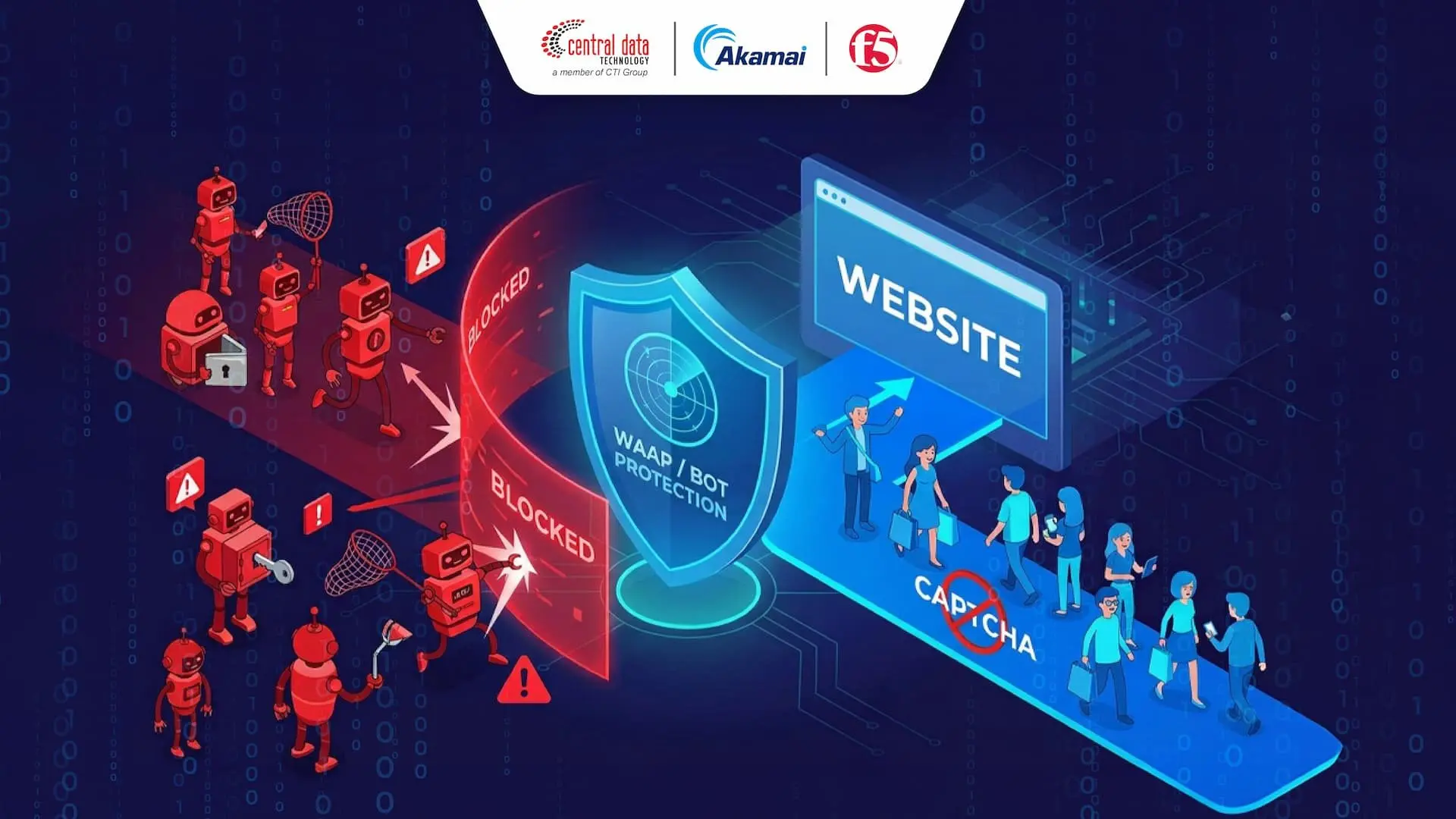
Web application bot attacks occur when automated programs are used to exploit applications or APIs. Modern bots can mimic human behavior, distribute requests across multiple IP addresses using proxies, and evade some verification mechanisms. As a result, IP blocking alone is often insufficient to distinguish malicious bots from legitimate traffic.
Credential Stuffing and Account Takeover
Credential stuffing occurs when attackers use leaked username and password combinations to attempt logins across multiple accounts automatically. Successful attacks can lead to account takeover, identity abuse, and unauthorized transactions.
Web Scraping and Transaction Manipulation
Bots can also scrape product information and pricing at scale, create fake accounts, or purchase inventory in bulk. These activities can undermine competitive advantages, distort analytics, and reduce product availability for legitimate customers.
Why Isn't a Traditional WAF Always Enough?
A Web Application Firewall (WAF) protects applications by filtering requests based on security rules and attack patterns. However, a WAF that relies heavily on static rules, IP reputation, or rate limiting may struggle to identify bots that disguise their activity to resemble legitimate users.
CAPTCHA and User Experience Friction
CAPTCHA can help verify users, but some bots can bypass these challenges through automation or human assistance. Frequent challenges can also slow down login and checkout processes, potentially reducing conversion rates.
Rising Infrastructure Costs
Bot traffic that passes through existing defenses still consumes application resources. As request volumes increase, servers and cloud bandwidth can be burdened by activity that generates no business value. IT teams may also need to spend additional time investigating traffic spikes and addressing their impact.
How Do Behavioral Analysis and Machine Learning Detect Bots?
Modern bot management combines behavioral analysis, machine learning, network reputation, and client-side telemetry to identify suspicious automation patterns.
Behavioral Analysis and Device Fingerprinting
Detection systems analyze interaction patterns, browser and device characteristics, and request consistency. Device fingerprinting helps identify device characteristics, while behavioral analysis assesses whether activity resembles human interaction or automated behavior.
Telemetry collected from browsers and mobile applications provides additional signals to identify bots attempting to disguise their identities. By combining multiple indicators, detection systems can go beyond relying solely on IP addresses or User-Agent strings.
Risk-Based Mitigation
Not all suspicious traffic needs to be blocked immediately. Depending on the detected risk, systems can allow trusted traffic, monitor uncertain activity, introduce additional verification, limit requests, or block malicious bots.
Adaptive mitigation helps strengthen security while minimizing unnecessary friction for legitimate users.
Akamai and F5 Distributed Cloud for Bot Protection
Akamai Bot Manager and F5 Distributed Cloud Bot Defense offer bot detection and mitigation capabilities for modern application environments. Businesses can evaluate these solutions based on their architecture, security requirements, and desired protection coverage.
Akamai Bot Manager: Detection at the Edge
Akamai Bot Manager helps detect and mitigate malicious bots at the edge, filtering unwanted traffic before it reaches application infrastructure. The solution uses behavioral analysis, browser fingerprinting, and AI to evaluate requests and respond to bot activity.
Akamai also provides a continuously updated bot directory and capabilities for managing trusted bots. This helps businesses distinguish legitimate automation from activity that could harm their operations.
F5 Distributed Cloud Bot Defense: Protecting Web, Mobile, and API Environments
F5 Distributed Cloud Bot Defense uses real-time behavioral analysis, client-side telemetry, and application interaction signals to detect malicious automation. Its protection capabilities cover web applications, mobile applications, and APIs.
These capabilities help identify bots that mimic legitimate users and adapt to mitigation as attack patterns change. Businesses can strengthen protection for critical workflows, including logins, transactions, and API access, without relying exclusively on CAPTCHA.
Traditional WAF vs. Modern Bot Protection
Evaluation Criteria | WAF with Static Rules | Modern Bot Protection |
Detection methods | Attack patterns, IP reputation, and configured rules
| Behavioral analysis, client-side telemetry, and device characteristics
|
User experience | Additional verification may create friction
| Mitigation can be adjusted based on risk |
Coverage | Depends on features and configuration
| Can cover web, mobile, and API environments |
Infrastructure efficiency | Bot traffic that evades detection continues to consume application resources
| Filtering at the appropriate layer can reduce malicious bot traffic reaching applications
|
WAF and bot management serve complementary purposes. A WAF helps protect applications against various attacks, while bot management adds capabilities to identify and handle automated activity based on behavior.
How to Implement Bot Management Without Disrupting Business Operations
A phased implementation allows businesses to evaluate security policies before enforcing them across the entire environment.
Audit traffic: Map traffic from human users, search engine bots, partner integrations, and potentially malicious bots. Prioritize endpoints that handle accounts and transactions.
Test policies: Use monitoring mode, where available, to evaluate detection results without immediately blocking traffic. Review potential false positives before enforcing policies.
Roll out mitigation gradually: Start with high-risk endpoints, such as login pages, checkout workflows, payment gateways, and critical APIs. Adjust policies based on risk and review their effectiveness regularly.
Monitor indicators such as malicious bot traffic, suspicious login attempts, transaction success rates, and legitimate users are incorrectly blocked by security controls. Regular evaluation helps balance security with user experience.
Bot Management FAQs
Will Bot Management Block Googlebot?
Not necessarily. Solutions such as Akamai and F5 can help distinguish trusted bots from malicious automation. However, businesses must configure appropriate policies and validate bot identities to avoid disrupting search engine crawling and indexing.
Why Can Modern Bots Bypass CAPTCHA?
Attackers may use advanced automation or human assistance to solve CAPTCHA challenges. Behavioral analysis and device signals provide additional context, allowing detection systems to assess risk without relying solely on visual verification.
How Does Bot Protection Help Reduce Cloud Costs?
Bot protection can mitigate malicious requests before they reach applications, depending on the implementation architecture. This helps reduce computing and bandwidth resources consumed by unwanted traffic while easing the operational burden on IT teams.
Protect Your Web Applications and APIs with CDT
Modern bot attacks require a more adaptive approach than IP blocking or CAPTCHA alone. By combining traffic monitoring, behavioral analysis, and risk-based mitigation, businesses can protect accounts, transactions, and infrastructure resources without unnecessarily compromising the user experience.
Central Data Technology (CDT), part of CTI Group, helps businesses evaluate application and API security requirements through Akamai and F5 Distributed Cloud solutions. Contact the CDT team to discuss a bot protection strategy tailored to your business and security needs.
Author: Wilsa Azmalia Putri – Content Writer CTI Group