When organizations evaluate AI initiatives, most of the attention is usually placed on the model itself. Teams compare model sizes, accuracy of benchmarks, and reasoning capabilities to determine which solution best fits their needs.
However, once AI moves from experimentation into production, another factor quickly becomes just as important: latency.
An internal chatbot that takes a few seconds to respond may be acceptable in some situations. But for applications such as fraud detection, real-time video analytics, smart manufacturing, or AI assistants serving thousands of users simultaneously, delays can directly affect productivity, customer experience, and even business outcomes.
As a result, the conversation is beginning to shift. Organizations are no longer asking only, “Which AI model should we use?” Increasingly, they are also asking, “Where and how is AI inference being executed?” The answer often determines whether an AI application merely functions or delivers the fast, seamless experience users expect.
What Is AI Inference?
In the AI lifecycle, two primary processes take place: training and inference.
Training is the phase where an AI model learns from large volumes of data. Inference, on the other hand, is the process of using that trained model to generate responses, predictions, or decisions based on new inputs.
Every time a user interacts with an AI assistant, uploads an image for analysis, or sends data from an IoT device, the system is performing inference.
From a user’s perspective, the interaction feels simple. Behind the scenes, however, the AI model must receive data, process it, and return a result as quickly as possible. The longer this process takes, the more noticeable the impact on the user experience.
Why Latency Is a Growing Challenge for Enterprise AI
Many AI applications today still rely on centralized infrastructure hosted in one or several data centers.
The challenge is that users are often located far from where the inference process actually runs. If a user in Jakarta accesses an AI service hosted thousands of miles away, data must travel back and forth across regions before a response can be delivered.
The farther the data travels, the greater the latency. For smaller workloads, the delay may be barely noticeable. But when applications serve global audiences, process real-time data, or support mission-critical operations, latency can become a significant performance bottleneck.
Edge AI Inference: Bringing AI Closer to the User
Edge AI Inference addresses this challenge by moving inference workloads closer to users or data sources.
Instead of routing every request to a centralized environment, AI processing can take place at locations that are geographically closer to where interactions occur. This reduces the distance data that must travel and helps deliver faster responses.
The result is improved user experiences, lower latency, and better support for applications that require near real-time decision-making.
As AI adoption continues to expand across distributed environments, edge locations, and geographically diverse user bases, this approach is becoming increasingly important.
It’s also worth noting that Edge AI Inference differs from traditional edge computing. While traditional edge architectures often focus on processing applications or data locally, Edge AI Inference brings AI capabilities closer to users and data sources. This allows analysis and decision-making to happen faster without constantly relying on centralized computing environments.
Enterprise Use Cases for Edge AI Inference
The benefits of Edge AI Inference can be seen across a wide range of industries and business scenarios.
Smart Manufacturing
Manufacturers increasingly rely on computer vision systems to detect product defects automatically. Inspection results must be delivered quickly, so defective products can be removed before moving further down the production line.
Fraud Detection
Financial institutions use AI to analyze transactions and identify suspicious activities in real time. Even a delay of a few seconds can affect the effectiveness of fraud prevention efforts.
Retail and Customer Analytics
Retail organizations can use AI to analyze customer behavior in physical stores, enabling faster operational decisions while enhancing customer experience.
AI Assistants and Customer Service
The faster an AI assistant responds, the more natural and productive the interaction feels. Low latency plays a critical role in creating seamless user experiences.
Akamai Connected Cloud: Bringing AI Infrastructure Closer to Users
To support low-latency AI applications, Akamai offers a distributed cloud approach through Akamai Connected Cloud.
Rather than relying solely on a limited number of centralized data centers, Akamai leverages a globally distributed cloud and edge network. This allows AI workloads to run closer to users and data sources, helping reduce latency and improve application responsiveness.
By moving inference closer to where data is generated and consumed, organizations can deliver more consistent AI performance across multiple locations and regions.
This approach is particularly valuable for businesses serving geographically distributed users or operating real-time applications across multiple sites.
Supporting AI Workloads with Flexible GPU Infrastructure
Latency is only one part of the equation. AI applications also require significant computing power.
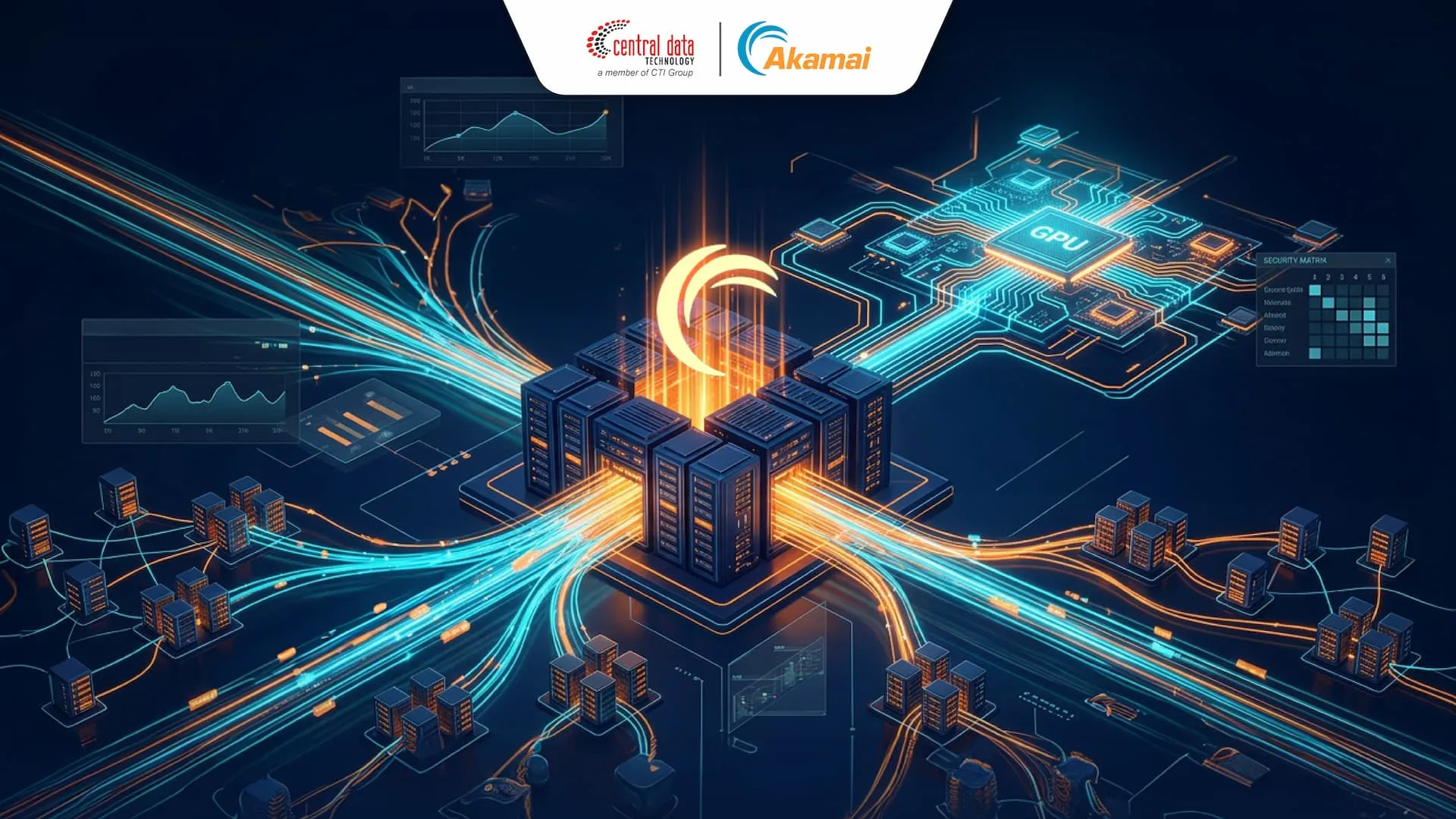
Modern AI models depend heavily on GPU acceleration to perform inference efficiently. Building and maintaining GPU infrastructure internally, however, often requires substantial investment and operational expertise.
Akamai provides cloud infrastructure designed to support GPU-powered workloads, enabling organizations to run enterprise-scale AI inference without managing the underlying infrastructure themselves.
This approach offers greater flexibility, allowing organizations to scale computing resources based on actual demand rather than projected peak usage. It also provides better visibility into AI-related costs as workloads continue to grow.
Securing AI Inference and API Traffic
As AI adoption increases, security becomes just as important as performance.
Most AI applications are accessed through APIs and endpoints that connect directly to users, applications, and business systems. These connections create new attack surfaces that organizations must protect.
Akamai integrates security capabilities into its infrastructure to help safeguard AI and API traffic from threats such as abuse, suspicious activity, and attacks that could impact service availability.
At the same time, a distributed edge architecture can improve resiliency by reducing reliance on a single centralized location for traffic and workloads.
For organizations operating in highly regulated industries such as financial services, healthcare, government, and public services, this helps balance security requirements with performance expectations.
Building Enterprise Edge AI with CDT and Akamai
Successfully adopting Edge AI Inference requires more than selecting the right platform. Organizations must also design an architecture that aligns with business objectives, workload characteristics, and performance requirements.
Central Data Technology (CDT), part of CTI Group, helps organizations design and implement Akamai-based AI solutions that deliver high performance, integrated security, and cost-efficient scalability.
From AI workload assessments and edge architecture design to deployment and integration with existing IT environments, CDT helps organizations accelerate their journey toward more responsive and scalable enterprise AI.
Interested in exploring how Edge AI Inference can improve the performance of your AI applications? Connect with the CDT team discuss your business requirements and discover the right strategy for your enterprise environment.
Author: Wilsa Azmalia Putri – Content Writer, CTI Group