Digital transformation has made enterprise IT infrastructure increasingly distributed. Workloads no longer run exclusively in an organization’s own data center. Depending on application and business requirements, they may span private infrastructure, public clouds, and edge environments.
This approach is known as hybrid cloud infrastructure, which combines on-premises or private infrastructure with public cloud environments. As environments become more complex, organizations may also adopt multiple cloud providers, creating a hybrid multi-cloud architecture.
This flexibility gives businesses more options for deciding where workloads should run. However, the more environments are interconnected, the more complex it becomes to manage cost, performance, and security. Excessive data movement can increase network costs and latency, while poorly designed connectivity can expand the attack surface.
Building an effective hybrid cloud, therefore, is not simply about choosing the right cloud platform. Organizations need to determine where workloads should run, how data should move, and how every connection should be secured.
Managing Egress Fees Through Strategic Workload Placement
In hybrid and multi-cloud environments, data movement is an important consideration during architecture planning. Egress fees, or charges associated with transferring data out of a cloud environment, may apply depending on the service, region, destination, and network path involved.
The challenge is not simply the amount of data being transferred, but also how frequently that data needs to move between environments.
Consider an application running in Cloud A that retrieves data from Cloud B before sending the processed results back to an on-premises data center. If this communication pattern occurs continuously, network transfer costs can increase as traffic grows. At the same time, every additional network hop can introduce latency.
This makes workload placement an important part of hybrid cloud cost optimization. Workloads should be placed in an environment that best matches their requirements, while network traffic should be designed to minimize unnecessary data movement between environments.
This approach also helps organizations avoid discovering cost issues only after their infrastructure is already in production. By understanding data transfer patterns early, IT teams can determine which workloads are better suited for on-premises infrastructure, public cloud, or edge environments.
Balancing Core Compute and Workload Scalability with Amazon EC2
Once workload placement has been determined, organizations need to compute infrastructure that can adapt to changing demand. Amazon EC2 (Elastic Compute Cloud) provides resizable compute capacity in the cloud that can be adjusted based on workload requirements.
EC2 can serve as one of the compute layers within a hybrid cloud architecture. Workloads that require greater infrastructure control, have specific regulatory requirements, or depend heavily on local systems can remain on premises. Meanwhile, workloads that require greater flexibility can leverage public cloud resources.
This approach can also support cloud bursting, where workloads are extended to the public cloud when demand exceeds available local capacity. For example, workloads with seasonal traffic spikes or certain batch-processing requirements can leverage additional cloud capacity without requiring organizations to provision enough on-premises hardware to handle peak demand year-round.
However, compute flexibility still needs to be considered alongside workload placement. Running a workload in the cloud simply because capacity is available does not necessarily make it the most efficient option. Data dependencies, latency, network traffic, and transfer costs all need to be taken into account.
EC2 should therefore be viewed as part of a broader compute strategy: placing workloads in the right environment while maintaining the ability to scale when business requirements change.
Reducing Application Latency with Akamai Connected Cloud and Edge Computing
Cost efficiency is not the only consideration. For applications that require fast response times, the distance between users, data sources, and compute environments can also affect application performance.
Rather than processing every workload in a centralized cloud region, edge computing allows certain compute and data-processing capabilities to be positioned closer to users or data sources. Akamai Connected Cloud supports this distributed cloud approach by bringing compute capabilities closer to the edge, making it suitable for workloads that require low latency and distributed processing.
For applications such as real-time analytics, IoT, content delivery, and AI inference, every additional trip to centralized infrastructure can introduce round-trip latency. Placing selected workloads closer to where data is generated or consumed can help reduce unnecessary network travel.
An edge-native approach also does not mean moving every workload to the edge. Core workloads can continue running in centralized cloud or data center environments, while latency-sensitive workloads are placed closer to users or devices.
This creates a more adaptive architecture where core infrastructure handles primary workloads and data that benefit from centralized processing, cloud compute provides scalability when demand changes, while edge infrastructure supports workloads that require faster response times.
The result is not only improved performance. Appropriate workload placement can also help reduce unnecessary traffic between edge, cloud, and on-premises environments, connecting low-latency architecture with network cost optimization.
Securing Hybrid Multi-Cloud with Zero Trust and F5 Distributed Cloud
As more environments become interconnected, relying solely on a traditional network perimeter becomes increasingly difficult.
In a hybrid multi-cloud architecture, applications may run across multiple clouds, data may remain on-premises, and users and devices may access resources from different locations. This makes security approaches that rely heavily on broad network access more challenging to manage.
This is where Zero Trust becomes an important approach for securing distributed infrastructure.
Rather than assuming that users or devices are trusted simply because they are inside a particular network, Zero Trust validates identity, context, and authorization before granting access. The principle of least privilege then ensures that users or workloads receive access only to the applications or resources they need.
This approach can be strengthened through micro-segmentation, allowing communication between applications, services, and workloads to be controlled through more granular policies. If one workload is compromised, these restrictions can help reduce lateral movement and limit the potential blast radius.
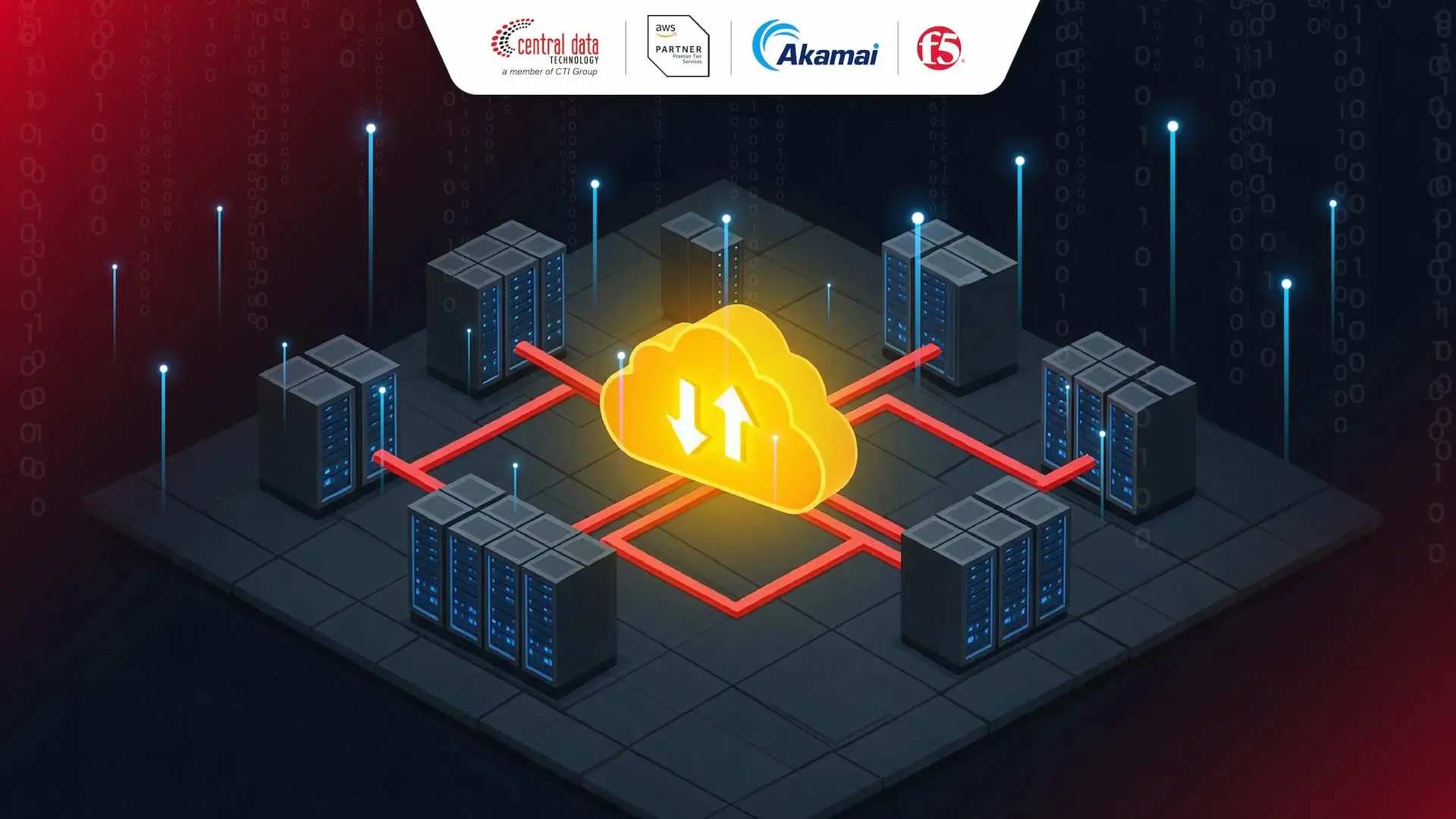
For hybrid and multi-cloud environments, security also needs to extend to connectivity. F5 Distributed Cloud provides secure multi-cloud networking capabilities that help connect applications and workloads across multiple clouds, data centers, and edge environments while providing more centralized security policies and visibility.
With this approach, NetOps and SecOps teams do not have to treat every environment as isolated infrastructure. Connectivity and security policies can be designed as part of a consistent framework while maintaining control over which users, applications, or workloads can communicate with specific resources.
Ultimately, multi-cloud networking is not simply about making different cloud environments able to communicate. It is about ensuring that this connectivity remains secure, observable, and aligned with the organization’s security policies.
Design Efficient and Adaptive Hybrid Cloud Infrastructure with CDT
Hybrid cloud gives organizations greater flexibility in deciding how and where workloads should run. However, that flexibility only creates value when the architecture is designed holistically.
Three areas need to work together:
Cost efficiency through strategic workload placement and data transfer management, including careful consideration of egress fees.
Performance through scalable cloud compute and edge computing that can position workloads closer to users or data sources when required.
Security through Zero Trust, least privilege, micro-segmentation, and secure multi-cloud networking to protect connectivity across distributed environments.
As an enterprise technology partner in Indonesia, Central Data Technology (CDT), part of CTI Group, helps organizations design and implement hybrid cloud architectures based on their specific workload, networking, and security requirements.
With technology solutions from AWS, Akamai, and F5, CDT can help organizations build infrastructure that is not only scalable, but also more cost-efficient, responsive, and secure as their IT environments become increasingly distributed.
Ready to evaluate your hybrid cloud architecture? Contact CDT to discuss the infrastructure, connectivity, and security requirements that best support your workloads and business goals.
Author: Wilsa Azmalia Putri
Content Writer CTI Group