
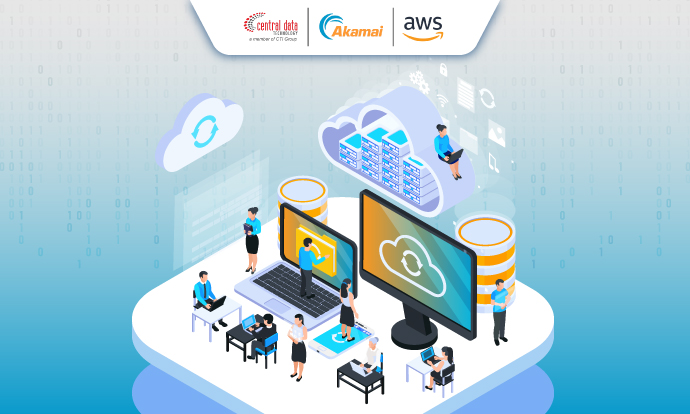
As more companies adopt cloud technology, the need for cloud infrastructure is becoming increasingly critical. This infrastructure serves as the foundation that enables businesses to run applications, manage data, and provide services more efficiently, quickly, and with the flexibility to scale as needed. In today’s digital era, cloud infrastructure plays a vital role in maintaining smooth business operations, particularly when it comes to handling data and applications that demand high scalability.
So, what exactly is cloud infrastructure, and how can it help your business navigate the challenges of the digital age? Find out in this article and see how its application can improve your company’s operational efficiency and scalability.
The Role and Definition of Cloud Infrastructure in Cloud Computing
Cloud infrastructure is a combination of hardware and software that forms the foundation of cloud computing systems. Core components like servers, storage, networking, and software work together to efficiently and seamlessly run cloud services.
As the backbone of cloud computing, cloud infrastructure allows businesses to achieve operational flexibility, cost efficiency, and the ability to scale their systems according to business needs. Without this infrastructure, crucial services such as data storage, online applications, and machine learning processes wouldn’t run smoothly or efficiently.
Key Components of Cloud Infrastructure
Cloud infrastructure is composed of several critical elements that ensure the system operates efficiently and securely. Each component plays a vital role in supporting scalable and reliable cloud computing services. Below are the primary components that make up cloud infrastructure.
Servers
Physical or virtual machines that provide the computational power to process data and run applications. These servers are the backbone of every cloud-based service.
Storage
Persistent data storage systems (like block storage, object storage, and file storage) that hold data and applications. Cloud storage is accessible from various devices with internet connectivity and can scale as needed.
Networking
The infrastructure that connects cloud components such as routers, switches, firewalls, and load balancers, ensuring the fast and secure flow of data between servers, storage, and users.
Virtualization
A layer that virtualizes hardware resources such as servers, storage, and networks, allowing multiple virtual machines (VMs) to run on a single physical machine, increasing efficiency.
Software
Platforms and tools that help manage and automate the use of cloud resources, including operating systems, management software, and user interfaces that facilitate the deployment and management of cloud services.
Management Tools
Tools for monitoring, provisioning, and managing cloud resources, such as APIs, command-line tools, and graphical interfaces that assist developers and IT teams in efficiently managing cloud infrastructure.
Understanding Public, Private, and Hybrid Cloud Models
Each cloud architecture model offers distinct advantages in terms of control, security, and flexibility. To better understand these differences, here’s a comparison between public cloud, private cloud, and hybrid cloud.
| Cloud Model | Definition | Key Features | Use Case |
| Public Cloud | Cloud infrastructure managed by third-party providers and shared among many users. | Cost efficiency, scalability, no maintenance. | Startups, test environments, large-scale applications. |
| Private Cloud | Dedicated cloud infrastructure for one organization, managed internally or by a service provider. | Greater control, improved security and privacy. | Regulated industries, sensitive data management. |
| Hybrid Cloud | Combines public and private cloud infrastructures for optimal flexibility. | Flexibility, enhanced performance, and security. | Companies needing scalability with high security for sensitive data. |
With public clouds, you gain cost efficiency and scalability. Private cloud offers full control over your data and tighter security, while hybrid cloud blends the advantages of both for more complex business needs.
Three Key Cloud Computing Models for Businesses
In cloud computing, there are three primary models that support business needs: IaaS, PaaS, and SaaS. Each model offers varying levels of control and ease of management. Here’s a comparison to help you understand their differences.
| Cloud Type | Description | Advantages | Example Solutions |
| IaaS (Infrastructure as a Service) | Provides virtual computing resources like servers, storage, and networking over the internet. | Full control over infrastructure, scalable, flexible. | AWS EC2, Google Compute Engine |
| PaaS (Platform as a Service) | Provides a platform for developers to build, test, and deploy applications without managing infrastructure. | Simplifies app development, no infrastructure management required. | Google App Engine, Microsoft Azure PaaS |
| SaaS (Software as a Service) | Offers ready-to-use applications over the internet, managed by the service provider. | Ready-to-use apps, no installation or infrastructure management. | Google Workspace, Salesforce |
IaaS offers complete flexibility in managing cloud infrastructure, PaaS simplifies application development with pre-integrated platforms, and SaaS provides ready-to-use software solutions without the need for infrastructure management.
Cloud Infrastructure vs Cloud Architecture
Though often thought of as similar, cloud infrastructure and cloud architecture play different roles in the cloud ecosystem. Here’s a table explaining the core differences between them.
| Aspect | Cloud Infrastructure | Cloud Architecture |
| Definition | Physical and virtual resources that support cloud services, like servers, storage, and networks. | Strategic design and blueprint that defines how services and applications are organized and interact. |
| Components | Servers, storage, networking, virtualization, management tools. | APIs, services, microservices, containers, and overall architecture. |
| Purpose | Provides computing power, storage, and connectivity for cloud services. | Manages how cloud services are implemented and interact with each other. |
| Focus | Operational infrastructure. | Designing and optimizing cloud services and applications. |
Cloud infrastructure consists of the resources powering cloud services, while cloud architecture focuses on the strategic design and interaction of services within that infrastructure.
Essential Requirements for Building Reliable Cloud Infrastructure
To build reliable cloud infrastructure, several key elements are required to ensure the system is flexible, scalable, and secure. Below are the essential components of a strong cloud infrastructure.
Standardized Architecture
A standardized architecture design is crucial for enabling scalability and elasticity of IT resources and supporting policy-based configurations.
Hardware and Software
Essential hardware such as servers, storage, and networking, along with software for virtualization, are necessary to efficiently manage and optimize cloud resources.
Virtualization and Containers
Supporting virtualization and containerization (like Docker and Kubernetes) to manage workloads more efficiently and in isolation.
Data Center Management Tools
Tools for monitoring, orchestration, and security to automatically and seamlessly manage cloud infrastructure.
Security and Compliance
Implementing security features like encryption, firewalls, and access control to protect data and meet regulatory requirements.
Self-service and Interfaces
User-friendly self-service interfaces for end users, admins, and developers to manage cloud resources easily.
Real-time Reporting and Visibility
Tools for real-time monitoring and full visibility to ensure system performance, SLA compliance, and cloud infrastructure security.
Key Benefits of Using Cloud Infrastructure
Adopting cloud infrastructure can provide significant benefits to help companies improve their efficiency and productivity. Here are the main benefits.
Cost Efficiency
Companies only pay for the resources they use, allowing for significant savings on hardware and maintenance costs.
Flexibility and Scalability
Cloud infrastructure allows businesses to quickly increase or decrease capacity as needed, ideal for handling fluctuating workloads.
Global Accessibility
With cloud infrastructure, data and applications can be accessed from anywhere in the world, as long as there is an internet connection.
Enhanced Security
Cloud providers offer robust security protocols, such as encryption, firewalls, and automatic backups, to protect company data.
Challenges of Cloud Infrastructure
Although cloud infrastructure offers many benefits, there are also challenges to be aware of:.
Dependency on Internet Connection
Cloud infrastructure performance relies heavily on internet speed and stability. Network disruptions can affect access to and use of cloud-based applications.
Limited Control
Since cloud infrastructure is generally managed by third-party providers, companies have limited control over physical hardware and data, which may pose issues for businesses with specific security or compliance requirements.
Hidden Costs
While pay-as-you-go models offer flexibility, cloud costs can spiral out of control if companies do not carefully monitor their usage, particularly if cloud resources are not optimized.
Read More: Must Know! 5 Benefits of Cloud Management for Modern Businesses
Best Cloud Infrastructure Solutions for Your Business
To maximize your business potential through cloud infrastructure, it is crucial to choose the right solutions tailored to your specific needs. Below are two recommended solutions to enhance the performance and efficiency of your cloud infrastructure.
Maximize Computing Power with AWS EC2
AWS EC2 offers a highly flexible and comprehensive computing platform with over 750 instances supported by a variety of processor, storage, networking, and operating system options. AWS EC2 enables companies to choose instance types that best suit a wide range of workloads, from machine learning to high-performance computing (HPC) and Windows applications.
Key Advantages of AWS EC2
- High reliability with a 99.99% SLA.
- AWS Nitro System for optimal security and performance.
- Support for Intel, AMD, and Arm processors, including graviton-based instances and spot instances for cost optimization.
- The only cloud supporting on-demand EC2 Mac instances and 400 Gbps Ethernet.
- Leading performance for machine learning with the lowest inference costs in the cloud.
Key Features of AWS EC2
- Global infrastructure with data centers worldwide, offering distributed computing capacity.
- Full support for heavy workloads such as SAP, HPC, ML, and Windows.
- Various purchase model options, enabling businesses to optimize operational costs as needed.
Global Connectivity with Akamai Connected Cloud
Akamai Connected Cloud offers globally distributed cloud infrastructure, delivering optimal performance at the edge with over 4,100 Edge Points of Presence (PoPs) in 130 countries. With over 1 Pbps edge capacity and 24/7 monitoring, Akamai ensures smooth user experiences worldwide, ideal for applications that require global performance and low latency.
Key Advantages of Akamai Connected Cloud
- Low latency and high performance across multiple global locations.
- Facilitates innovation with simplified management.
- Optimized costs with transparent pricing and minimal egress fees.
Key Features of Akamai Connected Cloud
- Edge PoPs that bring computing power closer to end users.
- Support for containerization for modern applications.
- Reliable network infrastructure for maximum global application performance.
Build the Best Cloud Infrastructure with CDT
Enhance your data security and operational efficiency with cloud infrastructure solutions from Central Data Technology (CDT). As an advanced consulting partner for AWS and Akamai in Indonesia, CDT provides complete consulting services from initial planning to after-sales support. We ensure that the AWS EC2 and Akamai Connected Cloud solutions implemented will be tailored to your business needs, helping you improve flexibility, efficiency, and operational scalability.
Contact us now to learn more about how we can help secure your business data effectively and support global cloud computing solutions that drive business growth.
Author: Danurdhara Suluh Prasasta
Content Writer Intern CTI Group


